Wireless
Fixed Wireless for Business: When a Point-to-Point Link Beats Waiting for Fiber
How fixed wireless links buildings, adds backup internet, and serves rooftops, plus what decides whether a link is reliable.
By UTECH · · 3 min read
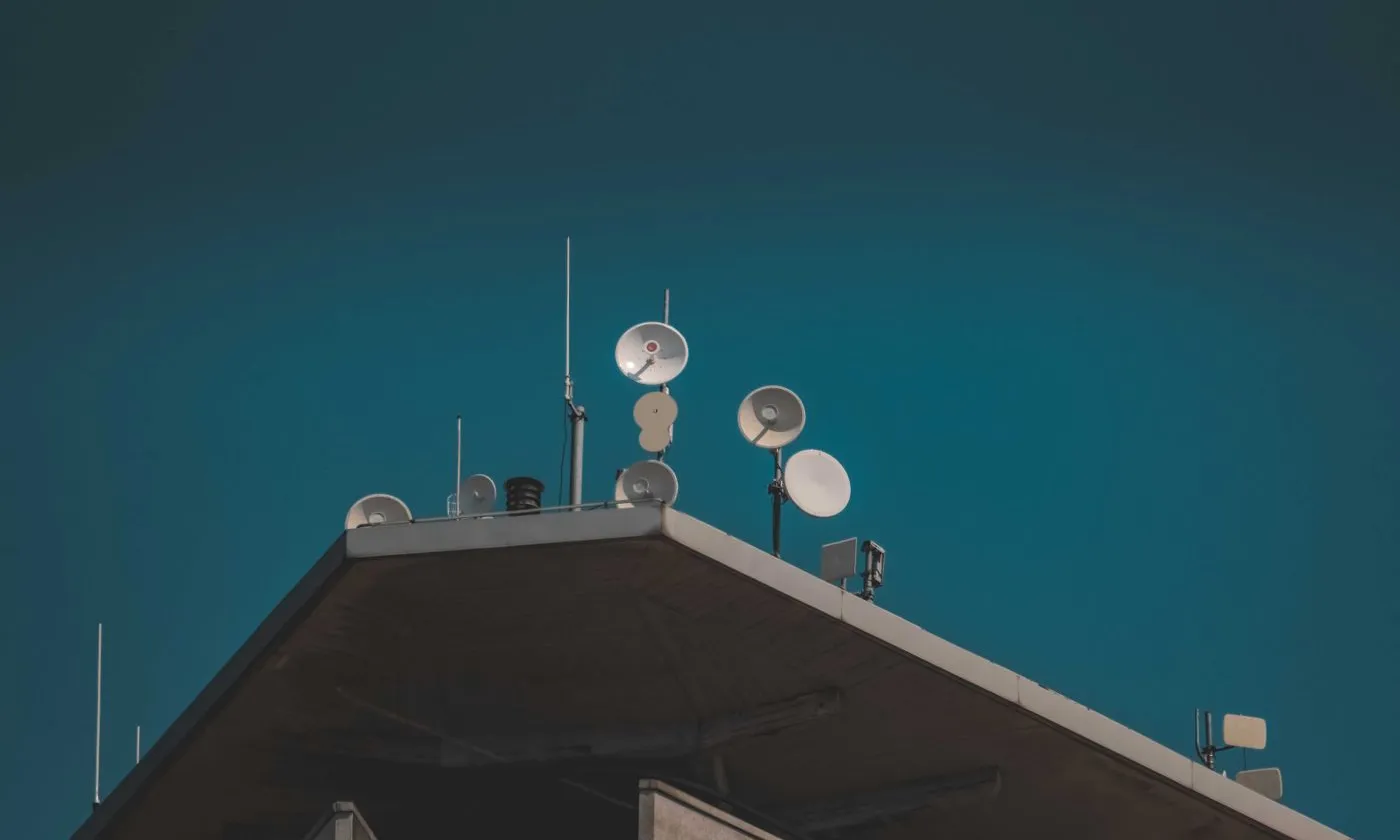
Fixed wireless connects two locations with a pair of radios aimed at each other, delivering fiber-like speeds without digging a trench or waiting on a carrier. When there is a clear line of sight, it is often the fastest and least disruptive way to link buildings, add a backup internet path, or bring service to a rooftop.
What fixed wireless is (and is not)
This guide focuses on stationary, directional radios mounted on roofs, walls, or poles, rather than cellular fixed wireless access (such as 5G business internet) or indoor Wi-Fi. Two common designs:
- Point-to-point (PtP): two radios link two locations, like a wireless cable. Used for building-to-building connections and backhaul.
- Point-to-multipoint (PtMP): one base radio serves many subscriber radios. Used by wireless internet providers to serve buildings and homes across an area.
Where it makes the most sense
- Connecting two buildings across a street, parking lot, or campus where trenching or a leased fiber circuit would be slow or costly
- A diverse backup path for internet service, so a cut fiber does not take the business down
- Temporary or fast-track sites like construction trailers, pop-up retail, and events
- Rooftop service for multifamily buildings, where a provider brings service to the roof and distributes it inside
- Hard-to-reach locations where carrier construction is quoted in months
The frequency bands, in plain terms
| Band | Licensing | Strengths | Limits |
|---|---|---|---|
| 5 GHz | Unlicensed | Longer range, inexpensive | Crowded in cities; lower capacity |
| 60 GHz | Unlicensed | Multi-gigabit, little interference | Short hops; heavy rain cuts performance |
| 70/80 GHz (E-band) | Light licensing | Multi-gigabit over longer hops | Needs precise alignment; rain affects it |
| 6–23 GHz microwave | Licensed | Long range, protected from interference | Licensing time and higher cost |
The right band depends on distance, capacity needs, how busy the airwaves are, and how much downtime the link can tolerate.
Line of sight is everything
Radios need a clear path between them, and not just a thin line. Radio energy spreads into an oval-shaped zone around the direct path (the Fresnel zone), and trees, rooftop equipment, or a new building in that zone degrade the link. A proper survey checks:
- Clear path at the mounting heights, including seasonal leaves and planned construction
- Distance and expected signal margin
- Interference from other radios on the same band
- Mounting options and structural capacity
- Power and cable pathways to the radio
Installation details that decide reliability
- Roof rights and landlord approval before any equipment is mounted
- Solid, non-penetrating or properly sealed mounts that hold alignment in wind
- Grounding, bonding, and surge protection on the mast and on the cable into the building
- Outdoor-rated, UV-resistant cabling with drip loops and weatherproofed connectors
- Precise alignment using the radio’s signal readings, not eyeballing
- Monitoring so the team knows when signal margin starts to drop, before users notice
Fixed wireless vs. fiber
Fiber remains the gold standard for capacity and weather immunity. Fixed wireless wins on speed to deploy and cost where fiber construction is slow, expensive, or impossible. Many businesses run both: fiber as the primary connection and fixed wireless as a physically separate backup.
Get the link designed and installed right
UTECH installs and services rooftop and building-mounted fixed wireless equipment across New York, New Jersey, and Pennsylvania, from path survey and mounting through cabling, grounding, alignment, and break-fix support. Contact UTECH to talk through your sites.