Fiber Optics
Emergency Fiber Repair: What to Do When Your Fiber Goes Down
A practical guide to fiber outages: first checks, how technicians locate a break, splice vs. replace, and how to reduce the risk of the next one.
By UTECH · · 3 min read
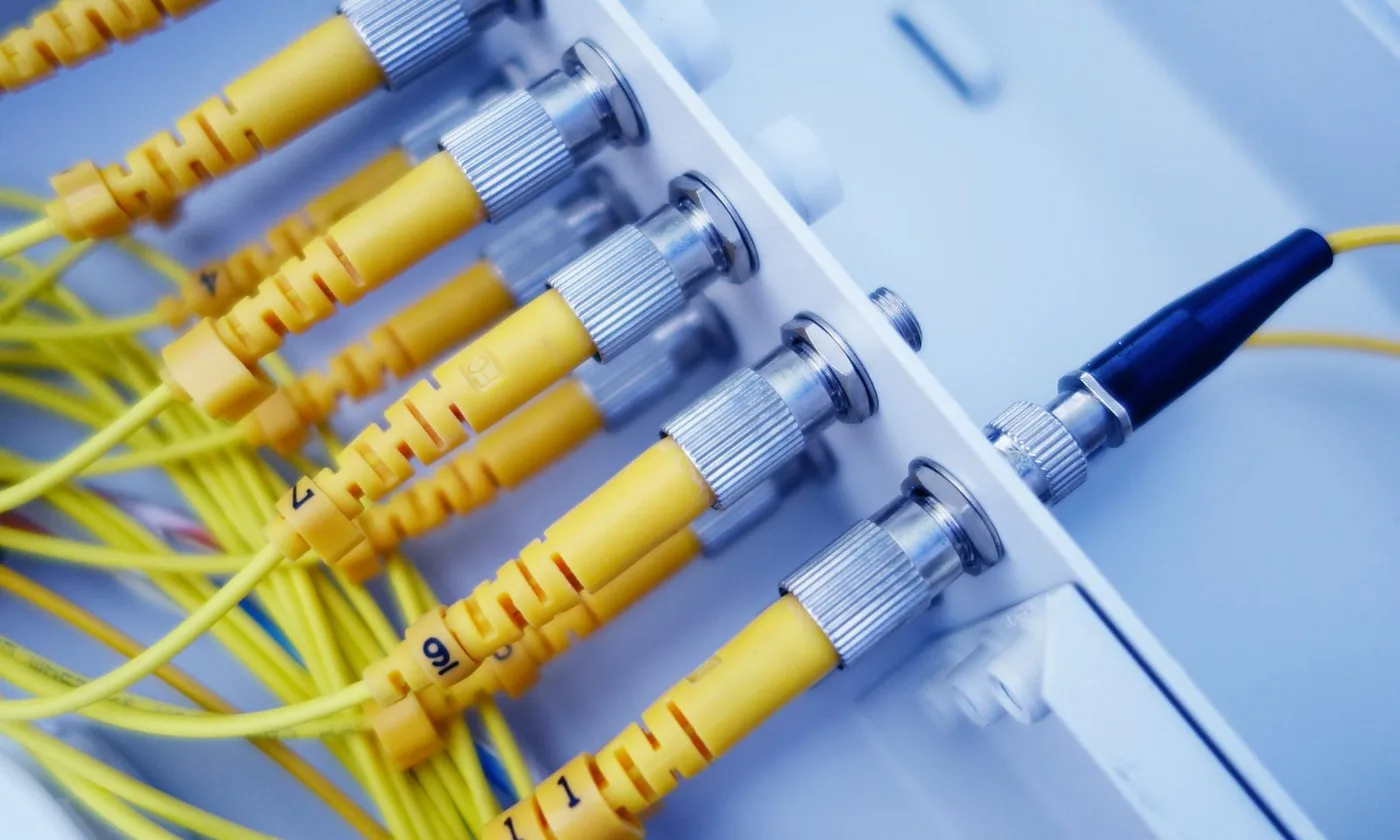
When a fiber link fails, everything behind it goes dark: a floor, a building, or a whole campus. The good news is that most fiber failures can be located precisely and repaired quickly by a trained crew with the right equipment. Here is what to check first, what happens during a repair, and how to make the next outage less likely.
First, figure out whose fiber it is
- Carrier fiber (from the street to your demarc) belongs to your internet provider. Call them first; your contractor cannot repair it.
- Building fiber (your backbone between telecom rooms, floors, or buildings) is yours. That is where a fiber contractor comes in.
Knowing where the demarc is, and having it documented, saves valuable time during an outage.
Quick checks before you call
- Are the switches or media converters at both ends powered on?
- Did anyone recently move equipment, patch cords, or work in the telecom room or ceiling?
- Are the link lights on the fiber ports off at both ends?
- Is the problem one link or many? Many links failing at once points to a cut or crushed cable.
Do not look into a fiber connector or port to check for light. Optical signals can be invisible and still harm your eyes.
How technicians find the problem
- Visual fault locator: a bright visible light sent down the fiber that shows breaks and sharp bends near the ends
- Light source and power meter: measures how much signal makes it through the link
- OTDR (optical time-domain reflectometer): sends pulses down the fiber and shows the distance to a break, bad splice, or damaged connector, often to within a few feet
Common causes include construction damage, crushed cable in tray or conduit, dirty or damaged connectors, rodent damage, and patch cords pulled during unrelated work.
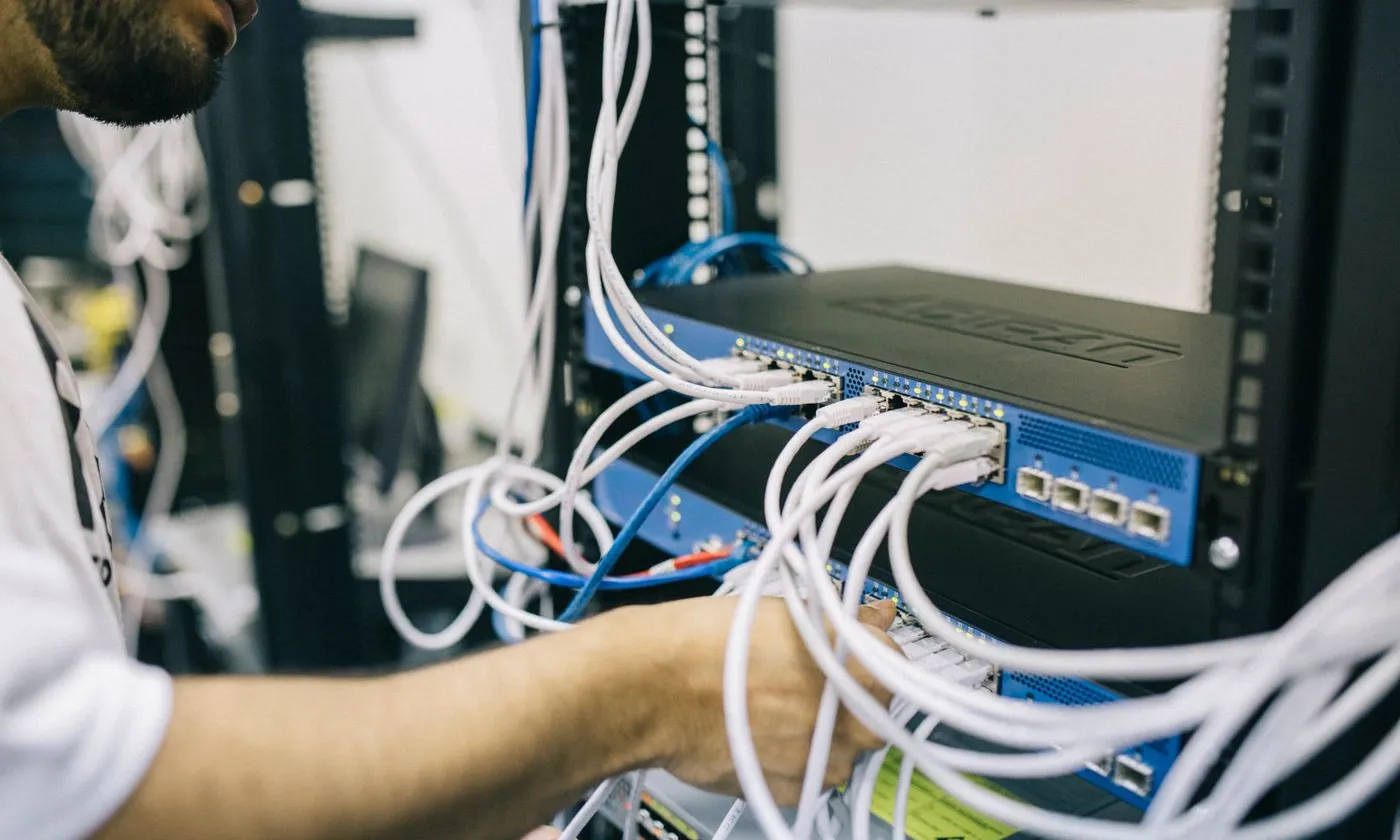
Repair options
- Clean or replace connectors: dirty end faces cause a surprising share of outages and are the fastest fix
- Fusion splice: joins broken fibers with very low loss, protected in a splice enclosure
- Replace a section: when damage is extensive, a new segment is pulled and spliced in
- Temporary restoration: in a true emergency, priority circuits can sometimes be moved to spare strands while permanent repairs are scheduled
Every repair should end with testing and updated documentation.
Reduce the risk of the next outage
- Install spare strands in every backbone cable
- Protect fiber in innerduct or armored cable where it shares pathways
- Label fiber clearly so other trades know what it is
- Keep current documentation: strand assignments, routes, and test results
- Consider a diverse path or wireless backup for critical links
Fiber repair in NY, NJ, and PA
UTECH locates, splices, repairs, and tests fiber optic cabling for businesses and multifamily buildings across New York, New Jersey, and Pennsylvania. Contact UTECH when your fiber goes down, or before it does.