Security & Access
Commercial Business Security in New York: Building a Layered System
How cameras, access control, intrusion alarms, and monitoring work together to protect a New York business, and how to plan a layered system.
By UTECH · · 2 min read

No single device secures a business. Cameras record, but they do not stop anyone at the door. Locks control entry, but they do not tell you when a window breaks. Effective commercial security combines layers that each cover the others’ gaps.
Layer 1: Control who gets in
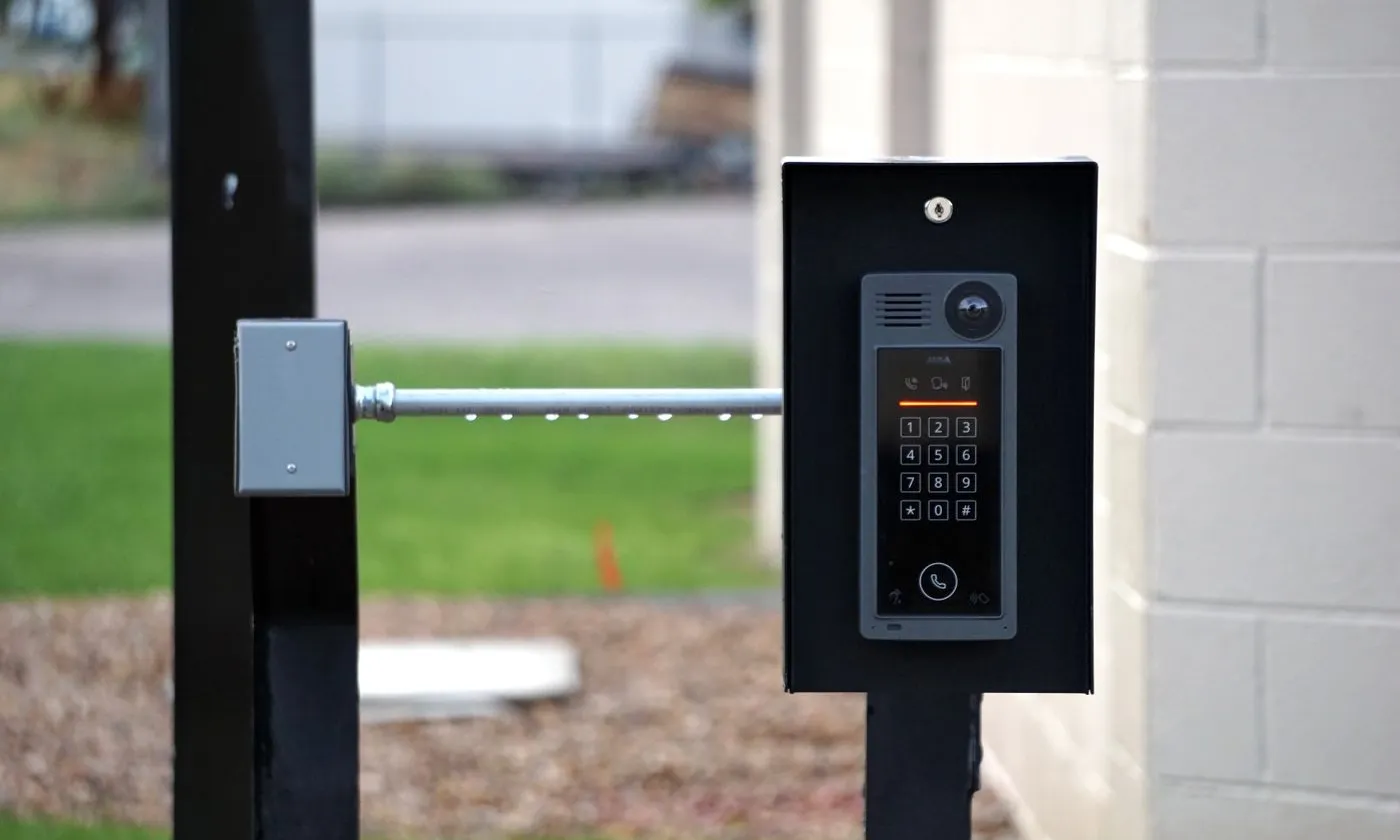
Access control replaces keys with credentials you can issue, schedule, and revoke instantly. It answers who entered, which door, and when. Secure smart cards or mobile credentials are the current standard; older proximity cards are easy to copy.
Layer 2: Detect what should not happen
Intrusion (burglar) alarms use door contacts, motion detectors, and glass-break sensors to detect entry when the building is closed. Connected to professional monitoring, they trigger a response within moments instead of discovering a break-in the next morning.
Layer 3: See and record
Video surveillance (CCTV) provides live viewing, recorded evidence, and a visible deterrent. Cameras at entrances, registers, loading areas, and parking lots cover the places incidents actually happen.
Layer 4: Protect life safety
Fire alarm systems detect smoke and heat, alert occupants, and notify responders. They also interact with security: designated doors must release during a fire alarm so people can get out.
Why the layers should work together
When systems are integrated, each one makes the others more useful:
- A forced-door alarm pulls up the camera at that door automatically
- Arming the intrusion system can lock doors and change access schedules
- Access logs and video together show exactly who did what, and when
- One management interface cuts training and administration time
Planning your system
- Assess risk: what you are protecting (people, inventory, cash, data) and where it is vulnerable
- Map the building: entrances, exits, high-value areas, blind spots
- Decide on monitoring: professional monitoring, self-monitoring through an app, or both
- Plan for the network: cameras and controllers need reliable cabling, PoE, and backup power
- Think about growth: choose platforms that scale as you add doors, cameras, or locations
Maintenance matters
Security systems need periodic testing: batteries, sensors, camera views, recording health, and door hardware. A system that silently fails is worse than none, because people stop watching.
Licensed commercial security in New York
UTECH is a NY DOS licensed installer (Lic. #12000323540) for fire alarm, burglar alarm, CCTV, and access control systems. We design, install, and service layered security for commercial, retail, and multifamily properties across New York. Contact UTECH for a security assessment.